Ancient World Now: Restoration of Roman Gold Earrings

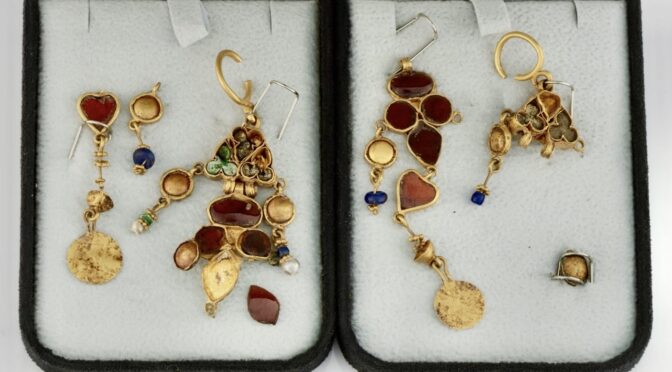
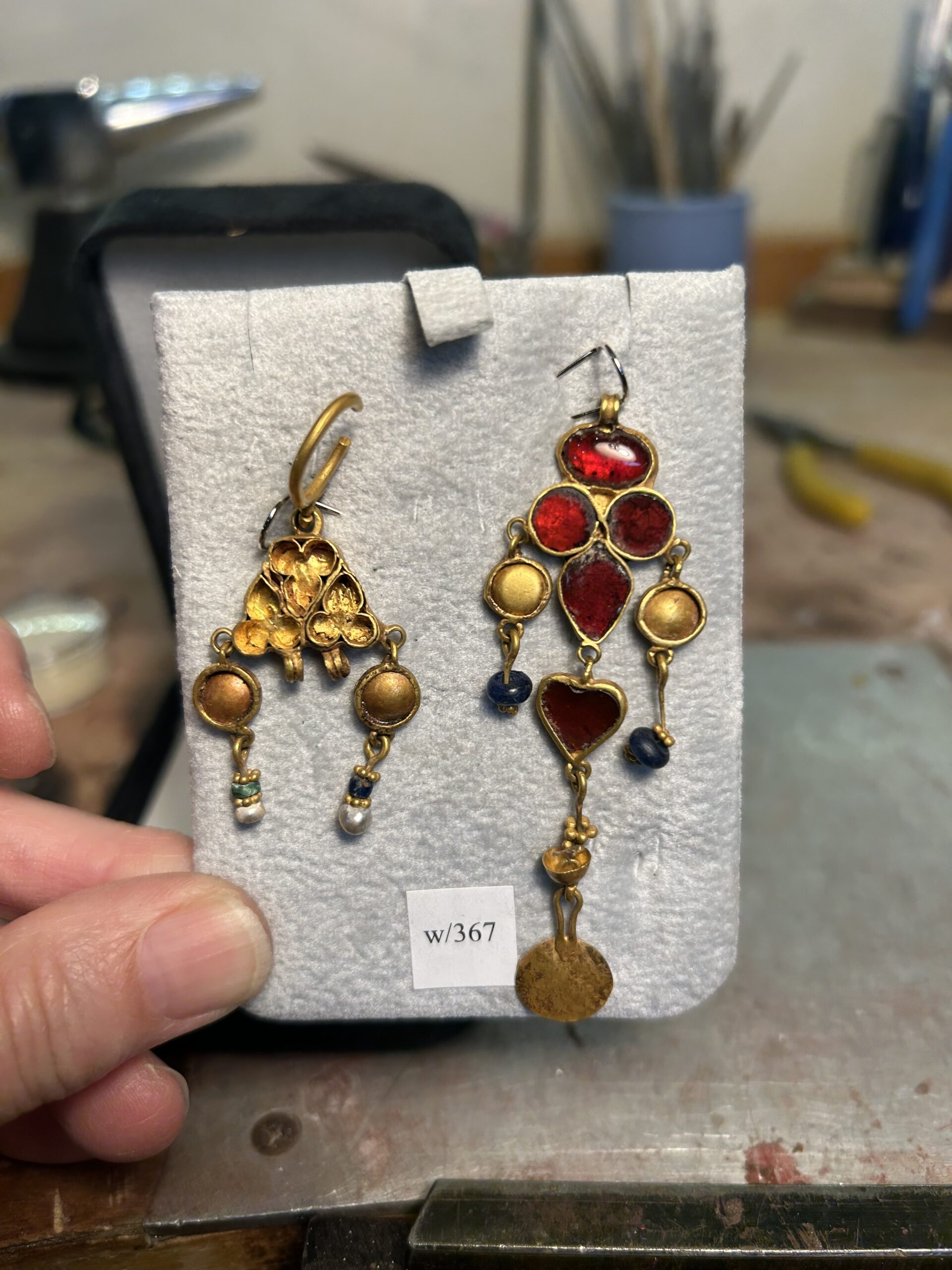
Last fall, I took a chance and bid on an extraordinary treasure. These 1st century Roman earrings of gold and garnet, with tiny pearls, turquoise and lapis lazuli, showed up in an auction in Virginia but had previously sold at auction at Christie’s in 2005. I’ve looked at a lot of ancient jewelry, and these matching beauties were a record 4 inches long. I had to have them. Under the guidance of Davide Bigazzi, master Florentine goldsmith, I will be restoring them to wear. Watch this space!

Screenshot
Screenshot

Ancient World Now: The London Mithraeum


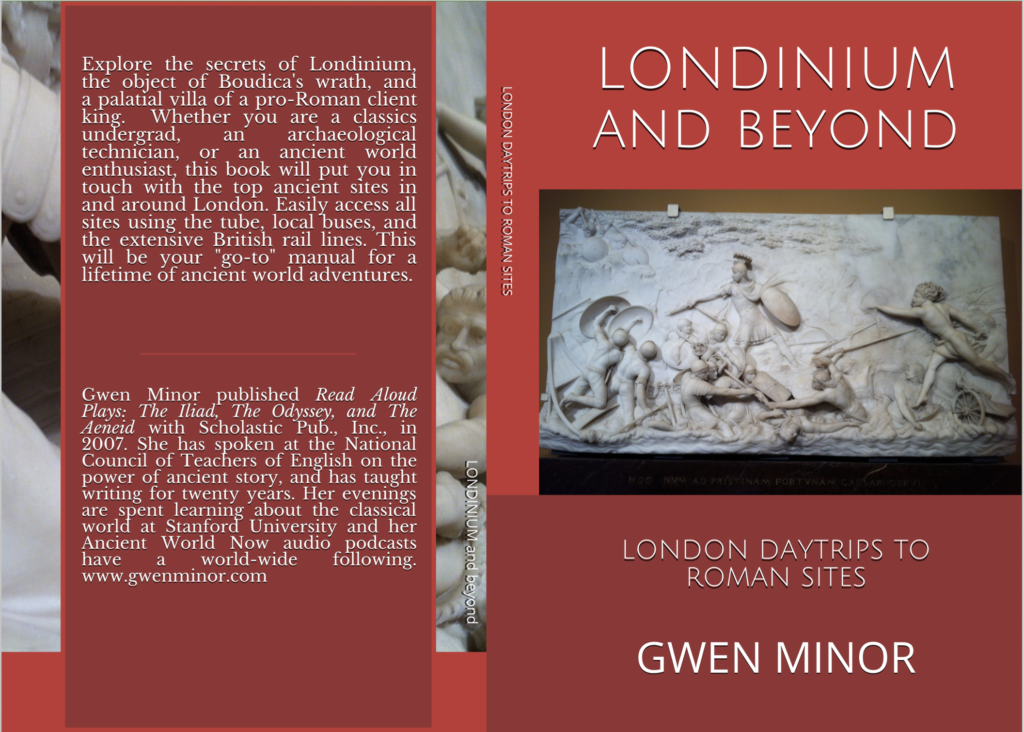
I am on my way to London this evening! I’ll be updating my book, Londinium and Beyond: London Daytrips to Roman Sites, and making my way towards publication. Stay tuned!

On my last visit, the location of the London Mithraeum was a huge, dusty, vacant, construction site surrounded by barrier fencing in the shadow of the Gherkin. As of November 2017, after 2,000 years, the Mithraeum is once again open to the public!

Ancient World Now: A Silk Road Tale

Hello Everyone! I am glad to be back after a long hiatus working on my book projects and taking those amazing ancient world night classes at Stanford. And what better way to celebrate my return than by announcing the publication of a book I worked on with author/illustrator Peter Linenthal!

My new podcast will be out soon.
The topic: Caesar’s Gallic War!


Jaya’s Golden Necklace

by Peter Linenthal

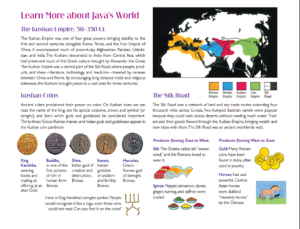
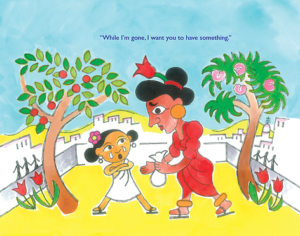
Little Jaya lives along the Silk Road in the first century CE and uses the powers of Greek, Persian, and Indian gods to gain courage to deliver a statue of the Buddha to the Kushan King Kanishka. Through the beauty of ancient coins, this spirited Gandaran tale highlights the spread of religious and artistic ideas in Central Asia.

I worked on this book with Peter, a long-time friend and children’s book author/illustrator. We’ve worked together over many years, attending conferences and workshops together as this book was developing. Jaya truly is fearless and her interesting historical setting deserves its place beside the other great empires of the ancient world.

Check out Peter’s beautiful new book!


Ancient World Now: Santorini (ancient Thera)

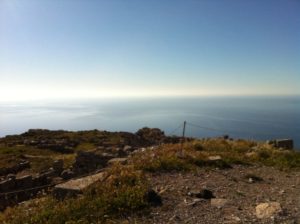
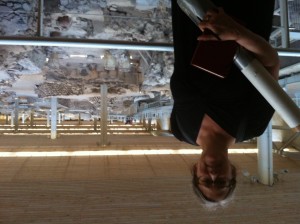
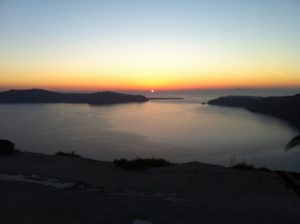
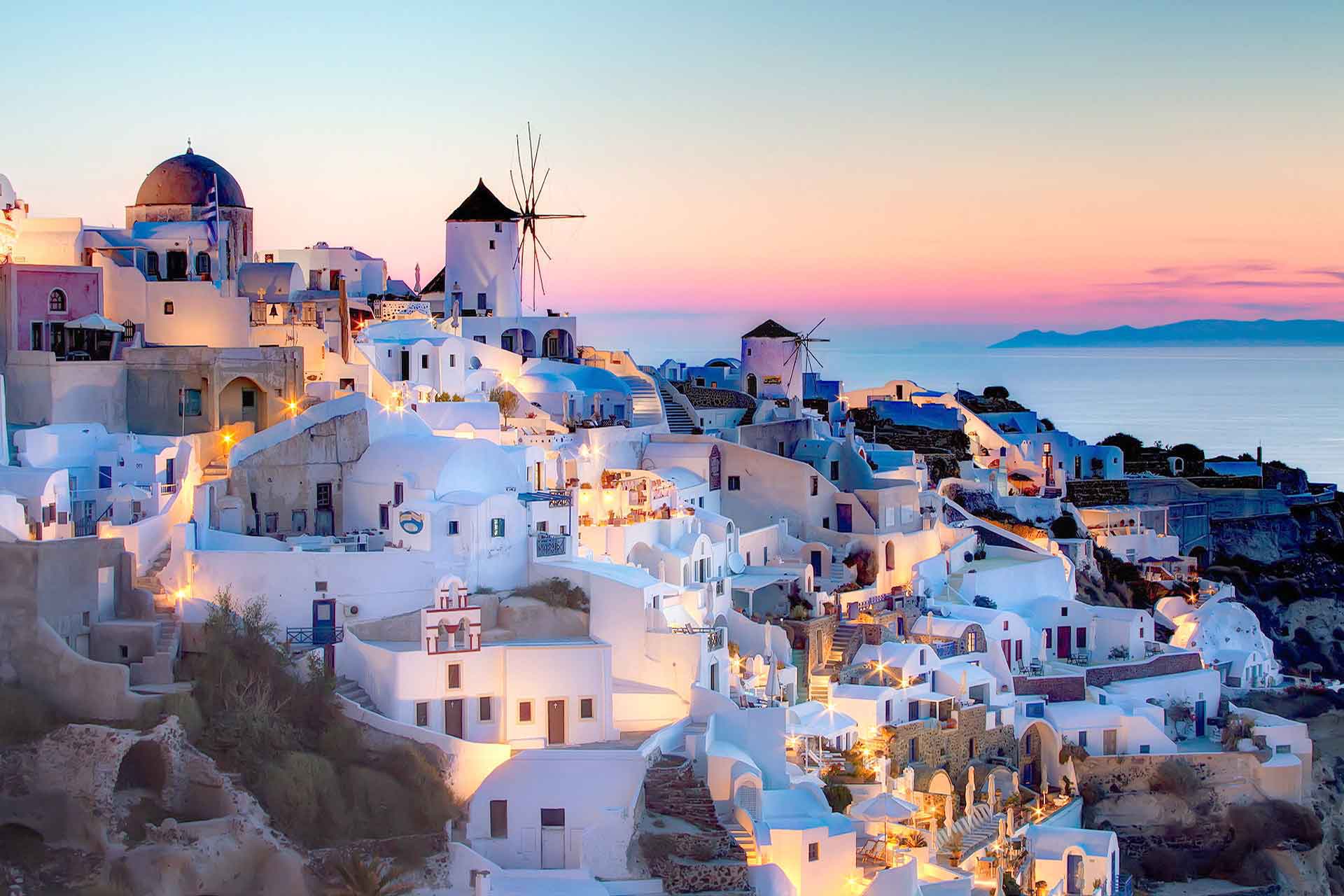
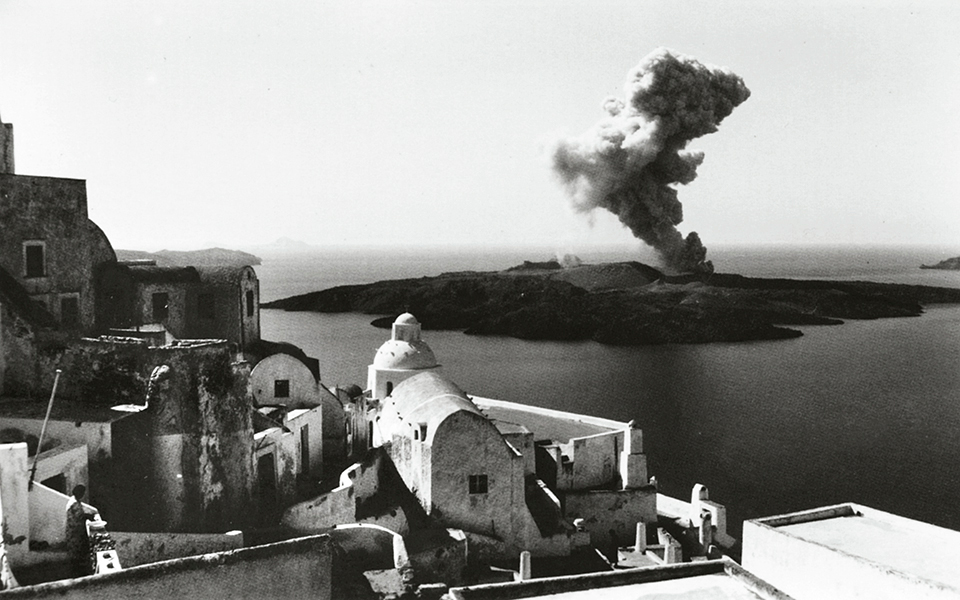
Our last stop on this magical tour of Greece is the island of Santorini, or as it was known in ancient times, Thera. We hiked to the top of a mountain peak and found an ancient settlement for the elite, where slaves delivered water and food because the rugged landscape could not be farmed. At the peak was a temple. We ended the day at Akrotiri, the town that was preserved under thick layers of ash after the volcanic eruption in 1628 B.C. Like Pompeii, it is as it was left nearly 4,000 years ago! Our hotel looks out on the caldera, which was the top of the volcano that blew off to create the crater.

imageimageimage

santorini-bg1NEW_SANTO_VOLCANO_02

Ancient World Now: Nemea

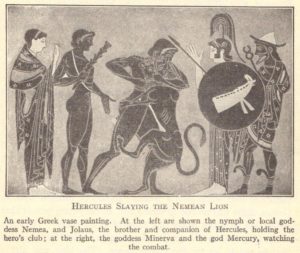
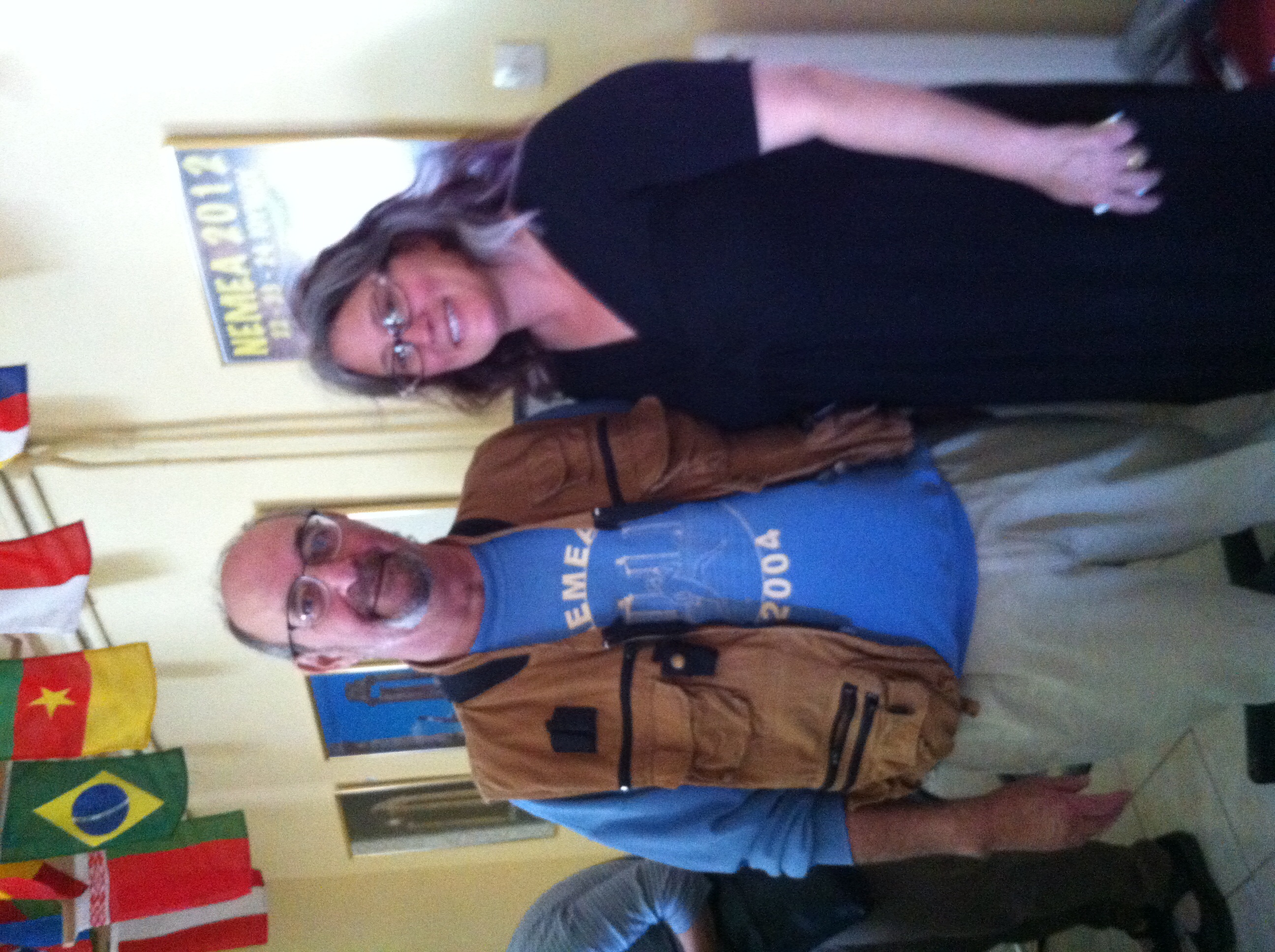
Nemean LionOur next stop on the tour was Nemea, the place where Hercules (Heracles) wrestled the lion. You always see Hercules with his club and lionskin. Stephen Miller, former director of the American School of Classical Studies in Athens and director of the excavations, gave us a tour of the site. It has been his life’s passion to re-establish the Nemean games, one of the four Panhellenic games held in ancient Greece. This summer will be the sixth annual games since they were ended at the site in the 3rd century B.C.! Miller is a graduate of U.C. Berkeley, and much help has been given by his alma mater and her graduates. If you would like to run in the games or help support them, go to The Society for the Revival of the Nemean Games website.


Ancient World Now: Olympia

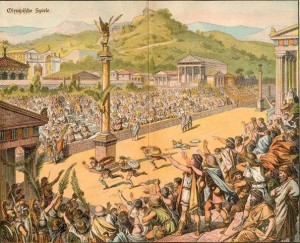
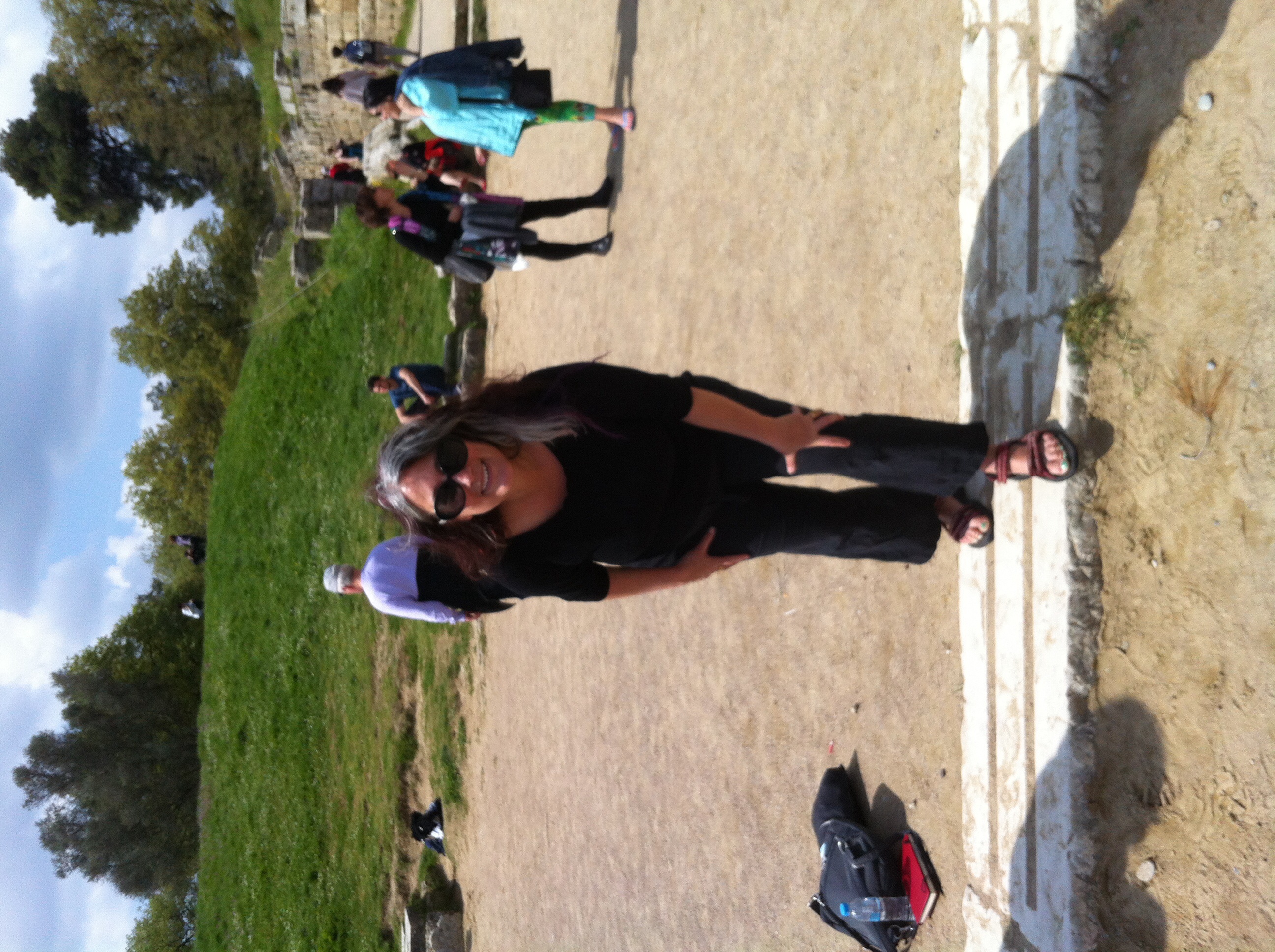
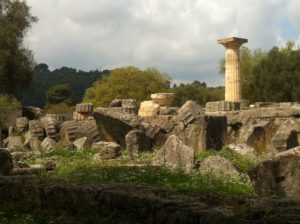
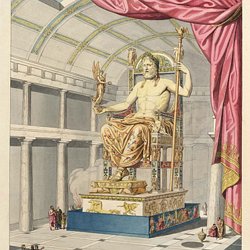
Hello everyone! We will be studying Olympia this spring, because our school is having its very own Olympic games! Yesterday we visited the place where it all began in 776 B.C. This is where the Olympic torch is officially lit and handed to the first torch-bearer in the relay to the games destination. One of the Seven Wonders of the Ancient World was here, the giant statue of Zeus. The Temple lies in ruins and the “wonder” long gone.
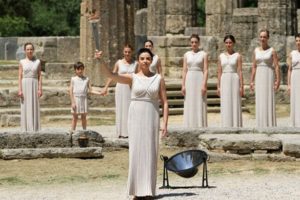
Ancient-Olympics5 Actress Ino Menegaki, acting as high priestess, lights the Olympic torch on May 9, 2012 during the lighting ceremony in ancient Olympia

image


olympia statue of zeus

Ancient World Now: Mycenae, Tiryns, and Epidaurus

Listen to my podcast on Mycenae: Episode #36: The Mycenaean World
MYCENAE
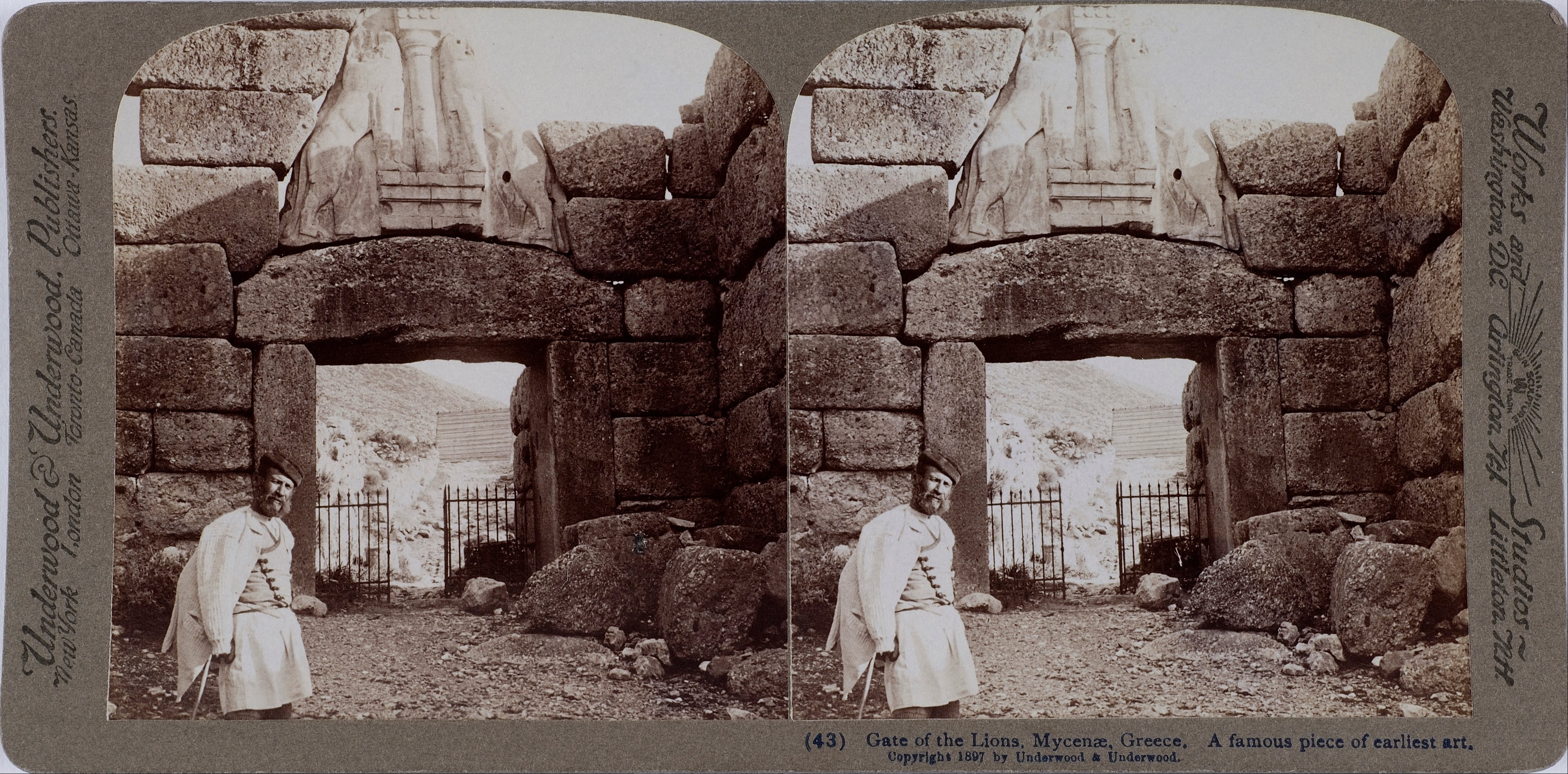
After all these years of reading Homer, Aeschylus, Sophocles, and Euripides, and marveling at Heinrich Schliemann’s fabulous discoveries, I finally made it to the Lion Gate at Mycenae! This place holds special meaning for me because the story of the Trojan War is my life’s focus, and its richness and depth continue to lead me in new directions.

Underwood_&_Underwood_-_The_Lion_Gate_at_Mycenae_-_Google_Art_Project

photo 4

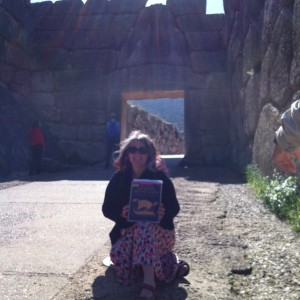
mycenae lion gateGreece March 2016 2551
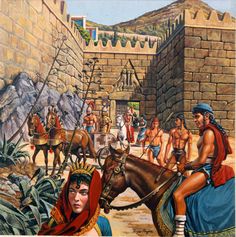
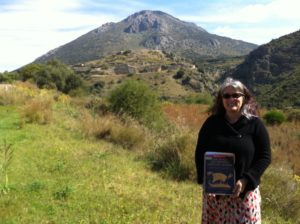
The Lion Gate is the main entrance to the citadel of Mycenae, which is on the hilltop behind me in this photo. This is where Agamemnon, Menelaus, Achilles, Odysseus, Ajax, and the rest of the Greek warriors met to discuss their plan to get Helen back from the Trojans, and where Clytemnestra watched for the signal fires for her husband’s return from the war.
Agamemnon had no idea what awaited him, but Cassandra, princess of Troy and war prize to the king, wailed unabated as she was brought in to the palace.

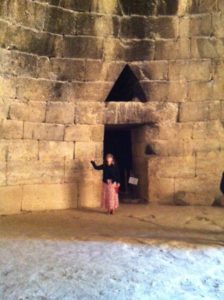
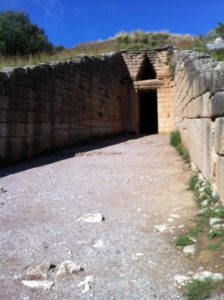
Shown below is the Tomb of Agamemnon, or the Treasury of Atreus, a beehive tholos built around 1250 B.C.: a massive structure. Bees actually inhabit the tomb and you can hear their buzzing hum when you walk inside.  This land is layered in myth and metaphor; every hill and valley, stream and copse tells a story. I still can’t believe I am here.photo 1 (1)
photo 2 (1)


TIRYNS
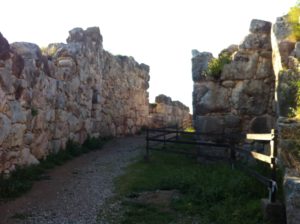
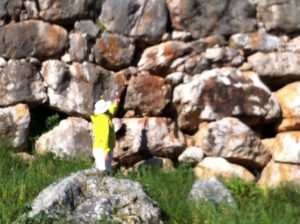
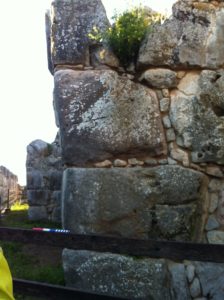
Before our visit to Mycenae we stopped to tour the fortress ruins of Tiryns. This site is where the term “cyclopean walls” originated, and in Homer’s Iliad, its epithet was “mighty-walled Tiryns.” Legend claims Hercules ruled here and that the walls were built by the cyclopes. Mycenae controlled the mountain pass into the plain, while Tiryns controlled access by sea.
Greece March 2016 2417 Greece March 2016 2411


Greece March 2016 2420

photo (9)photo (7)EPIDAURUS
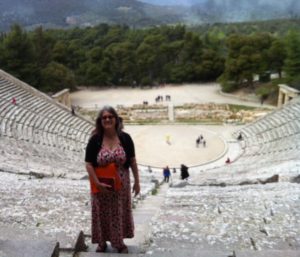
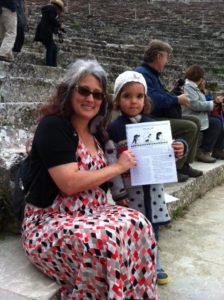
At the 4th century Theatre at Epidaurus, the first 2 scenes from my Iliad play were performed by some members of our tour group. Considered by scholars to be the best preserved theatre from the ancient world, it is a masterpiece of acoustical engineering and architectural proportions.  Erika, from the audience, receives a copy of the play.

Ancient World Now: Corinth

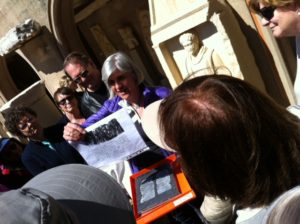
corinthI’ve always known about the great rivalry between Corinth and Athens, but I never fully understood why. After visiting the site yesterday, I understand. Corinth was a rich trading center with easy access to the sea. Its merchants travelled far and wide, and its craftsmen and artisans made some of the most beautiful pottery in the ancient world. In the photo, Joulia Tzonou-Herbst, Assistant Director of the excavations at Corinth, who gave us our tour, shows us a curse tablet made of a wafer-thin piece of lead dated to 72 A.D. Curses were written down and placed inside sanctuaries to elicit the aid of a god or goddess to do horrible things to enemies. This curse tablet has the worst curse I’ve ever heard!  photo 2

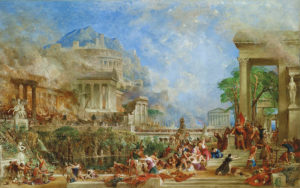
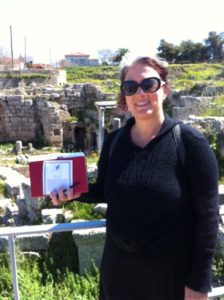
And, of course, Corinth is most famous for Pegasus, the winged horse! I am standing in front of the very spot where Pegasus was bridled by Bellerophon (Perseus, in a variation of the story )with help from Athena. In his anxiousness, Pegasus struck his hoof onto the ground and spouted a spring they call the Peirene Fountain. Peirene FountainStanding

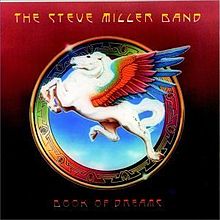
next to it you can hear the water rushing through the channels and cisterns and subterranean stone ducts, as if a rushing river were coursing through. In the painting above, you can see the fountain and a statue of Pegasus.On the slip of paper I hold is an image of Pegasus, whom I’ve loved since I was a child. I became a fan of the Steve Miller Band when his Book of Dreams album featured Pegasus. photo (4)220px-Bookofdreamsalbum


The dog is posing in front of the lovely Doric temple of Apollo here in Corinth. There are dogs and cats living at all of these archaeological sites, and they are very popular with the visitors! 

HELLO ROOM 5! This section is addressed to you!

Food I Ate Today: Grilled sardines—amazing!!! Not at all like the sardines in a can!

I Wonder: I wonder what it is like to ride a horse that flies.

Lesson and Activity: Draw Pegasus! Notice how the feathers of his wings are arranged.

Ancient World Now: Crete II

CAVE OF ZEUS peak with snow
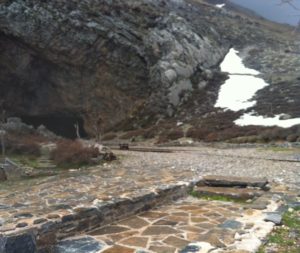
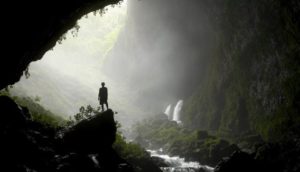
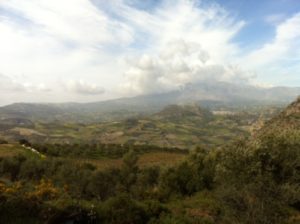
Yesterday we hiked five miles to the top of Mount Ida, the highest peak on Crete, where Zeus, in some stories, was born, and in other stories, was raised. It was also called the Philosophers Cave & it is said to have inspired Plato to write his Allegory of the Cave. We carried a couple of oak branches up the mountain because the oak is a symbol of Zeus. Our professor read from the ancient historians and told us the Seven Sages of Greece, Pythagoras, Plato, Epimenides (who, while tending his father’s sheep, fell asleep in the cave for 57 years!), and many other ancient seekers of wisdom were said to have visited the cave. thecaveI saw a goat up in a tree browsing on the leaves, and the sky was dramatic with heavy black clouds, shafts of light, and fluffy cumulus. There was snow in patches close to the peak, and hail fell from the sky when we stood at the mouth of the cave. Earlier in the day after a stop along the road, we met a Greek Orthodox priest of a village church who said, “The place where you are going is sacred.” The gate was locked, so we couldn’t go into the cave, but this image is what I imagine it looks like inside.

AMNISOS
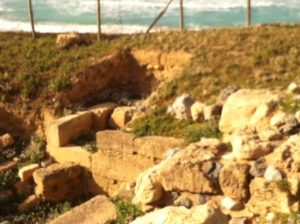
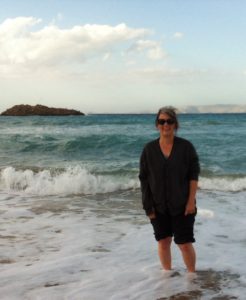
At day’s end we visited the Minoan port of Amnisos. The Karteros River, which begins on Mt. Ida, meets the sea here. The volcanic eruption of Thera in 1620/8 B.C. sent a 50-foot tidal wave to Crete and destroyed the Minoan fleet, the compression force from the wave being so great it left the imprint of each ship in the sand. Finally, just before leaving the site, I got to dip my feet into the same water in which the Greek ships sailed on their way to Troy—and the same waves that tossed Odysseus up onto Nausicaa’s beach. Another magical day in this enchanted land.

 32e1d91
 portinsea

VATHYPETRO
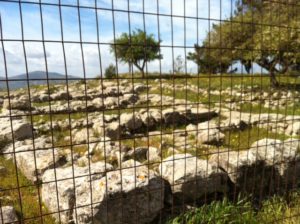
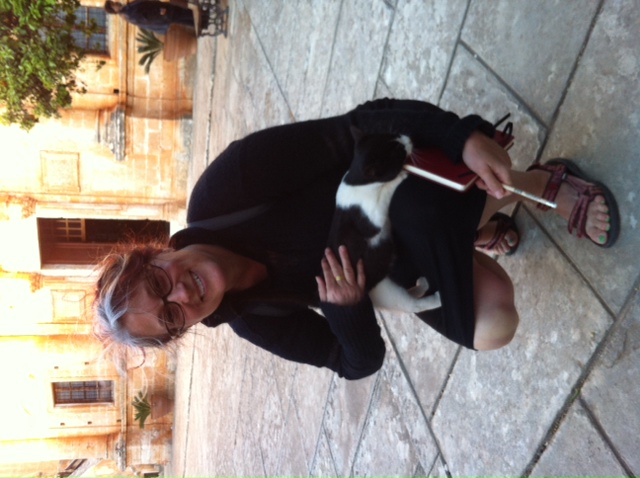
Today, we visited a Minoan site called Vathypetro that holds the distinction of having one of the oldest vineyards, olive orchards, and winepresses in the world. siteThe site dates back to at least 3,500 years ago. Later, we visited a Greek Orthodox monastery where I met a new friend I wanted to bring home to California. view of kings

Ancient World Now: Crete I

photo 2(1)photo(5)photo(4)Listen to my podcast on the
Minoan world:
Episode #35: Minoan Crete

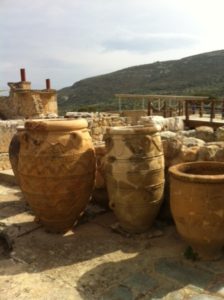
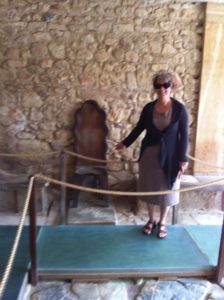
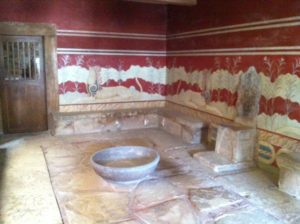
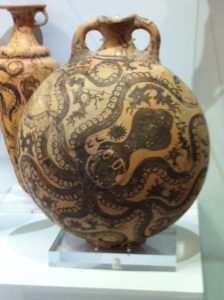
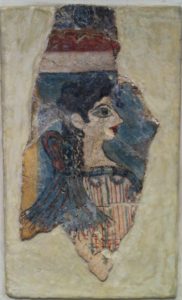
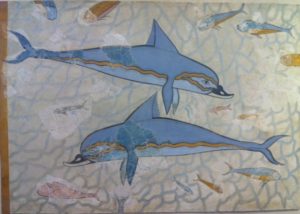
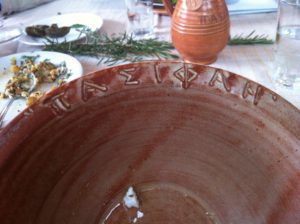
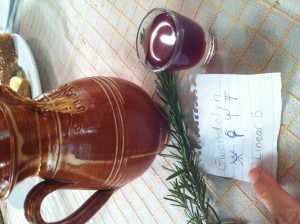
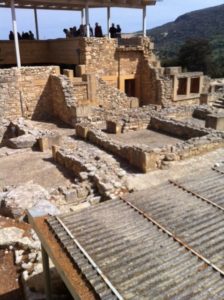
Yesterday we flew into Crete, the island of the Palace of King Minos and his Labyrinth. After dropping our luggage off at the hotel, which looks out over the sea, we visited Anemospilia (“cave of the winds”) on Mt. Juktas, the site of a temple, thought to have been destroyed by the volcanic eruption on Thera in 1620/8 B.C. At the Heraklion Archaeological Museum, we saw the finds that were found on the site and the famous frescoes and objects from the palace at Knossos. And finally, this morning we went to King Minos’s palace, discovered and excavated by Sir Arthur Evans, The “Throne Room” with its griffin fresco is one of the most well-known images in archaeology. What an “amazing” experience to walk through the halls and across the courtyard of this iconic palace. Strangely enough, the site was closed suddenly when gale-force winds of 50 miles per hour caused injuries to visitors. We lunched at a new restaurant called Pasiphae, named after the queen of Knossos and wife of King Minos. Professor Hunt & his team had arranged for a Minoan feast with foods from the ancient island. The food was delicious and fresh, with island ingredients such as dill, barley, coriander, olives, sesame seeds, honey, and mint. The pottery from which we ate and drank had Linear B inscriptions (Linear A and Cretan Hieroglyphs haven’t been deciphered yet!) and was especially made for us. imagePainted on the chairs were Linear B words for various occupations like goatherd, charioteer, and assistant to the temple. The beautiful placemats had the family tree of King Minos and the Linear B translations for the occupations. My chair inscription read “local leader.” The crowning glory of this extraordinary experience was a translation of all of our names into Linear B by a professor who joined us just for the occasion! Our day ended with wine tasting and a tour at Boutari, for wine-making on Crete dates back nearly five thousand years!
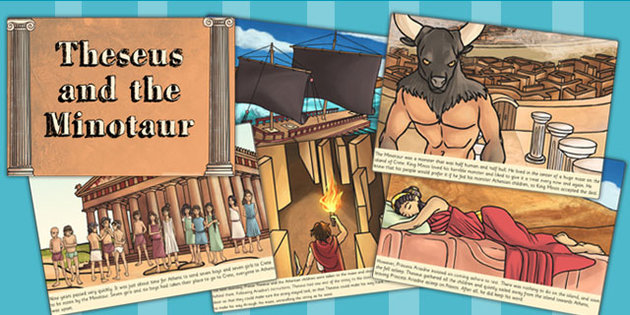
theseus and the minotaur
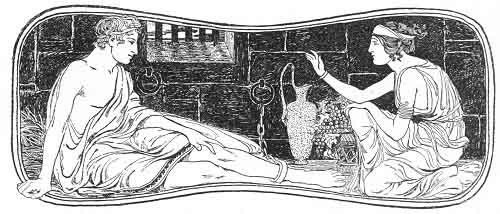
ariadne and theseusphoto(7)HELLO ROOM 5! This section is addressed to you!
The Labyrinth, where King Minos kept the the half-man, half-bull Minotaur, was built by the great craftsman Daedalus, who was also famous for making a pair of wings for himself and his young son, Icarus. Icarus, in his excitement, disregarded his father’s instructions, flew close enough to the sun to melt the wax that held the feathers together, and plummeted into the sea.
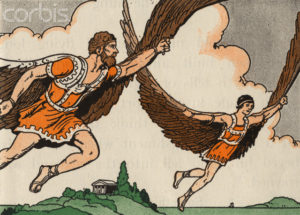
1936 --- A book illustration from Trails of Adventure. --- Image by © Blue Lantern Studio/Corbis

Food I Ate Today:
A garbanzo bean salad with barley, sesame seeds, coriander, tomatoes, feta, and sardines.

I Wonder: I wonder what the sesame plant looks like.

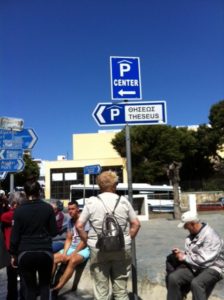
Lesson and Activity: Do you see the street sign? It has the hero’s name on it: Theseus. What do the street signs in your neighborhood say? Talk to your family about what they mean?
photo(10)
photo(11)


photo 1(2)photo 2(2)

Stories From the Ancient World